loveMONEY EN-UK
23 brilliant British inventions that made the world a better place
Modern British inventions
By Alice Cattley · July 31, 2026
What Britain has invented since the 1970s
The UK has a long and famous history when it comes to inventions that helped shape the world as we know it today.
But what might surprise you is just how many new groundbreaking creations and discoveries it's responsible for over the past 50 years.
Click or scroll on as we celebrate 23 of the most exciting British innovations of modern times.
Balti curries
The word balti, meaning bucket, appears in Urdu and Bengali and originated with Portuguese travellers in the 16th century. But the balti curry was invented in either 1971 or 1977 and, although the dates are disputed, is generally attributed to Pakistani restaurants in Birmingham.
The city even has a district of restaurants known as the "Balti Triangle".
Modern fold-up bicycles
An essential for many commuters, the folding bicycle was given a new lease of life by Brompton Bicycles, founded by Andrew Ritchie in 1976.
Although folding bikes have been around for over 100 years, they've enjoyed a surge in popularity since the 1980s as they've become lighter and more efficiently portable.
Bungee jumping
So-called "vine-jumping" has been carried out for generations in Vanuatu, but the first jump using a modern elastic rope system took place on Bristol's Clifton Suspension Bridge in 1979.
David Kirke, Simon Keeling and Geoff Tabin were members of the Oxford University Dangerous Sports Club and were inspired by vine-jumping to invent their own version of the activity now beloved by adrenaline junkies around the world.
Digital audio player
The invention of a digital audio player – a forerunner for the MP3 player – was a triumph of innovation, but a failure of British business. Kane Kramer filed for a patent for IXI in 1981. It had an LCD screen, navigation and volume buttons, and a memory chip. Five working prototypes were made in 1986, with Sir Paul McCartney a notable investor in the product.
But in 1988, a boardroom dispute meant the patent was never renewed. As a result, the design entered the public domain, allowing other inventors to create their own rival models. Without Kane Kramer's vision, the iPod probably wouldn't exist.
Bagless vacuum cleaner
When James Dyson invented the G-Force bagless vacuum cleaner in 1983, he had to create his own manufacturing company to build it. The investment more than paid off. His use of cyclonic separation proved a hit, not only saving people money on disposable dust bags but also enabling machines to last longer.
Today, the inventor and his family are worth over £20 billion, according to the most recent Sunday Times Rich List.
DNA profiling
DNA profiling has given police a huge advantage in solving crimes. British geneticist Sir Alec Jeffreys (pictured) developed the process in 1984 at the University of Leicester.
The first successful identification and prosecution using the technique took place in the city four years later.
ARM processors
ARM technology is behind many of today's smartphones. The company, which was founded in Cambridge in 1990, provides the technology for central processing units (CPUs) that power mobile phones and computers, although it doesn't actually build microchips itself.
It was bought by Japanese conglomerate SoftBank for £24 billion in 2016, the equivalent of over £33 billion today.
Hawk-Eye technology
Did the ball cross the line? Prior to the invention of Hawk-Eye technology in 1991, no one knew for sure. Developed by Paul Hawkins, the Hawk-Eye system uses six or seven cameras to work out a ball's position to 3.6mm.
First used for cricket coverage, it's now used in tennis and many other sports and is the technology behind VAR in the English Premier League and Scottish Premiership.
Personal Digital Assistants
Remember the days before smartphones? The first Personal Digital Assistant (PDA) computer was British. The Psion Organiser was launched in 1984 by London-headquartered technology company Psion.
For the first time, you could record an address or search for one on a pocket-sized computer. However, PDAs were phased out in the 2010s following the advent of smartphones.
Liking this? Click the Like button above. And click the Follow button above for more great stories from loveMONEY
The World Wide Web
Neither this article, nor Facebook, Amazon or Netflix would exist without the World Wide Web, developed by Londoner Sir Tim Berners-Lee (pictured right) in 1991.
Although computers had previously been linked to each other, Berners-Lee devised and implemented the first web browser and web server, generating a virtual space for websites to be built.
Text messages
In December 1992, Reading-based engineer Neil Papworth sent the first ever SMS message, wishing his colleague Richard Jarvis ‘Merry Christmas’ via Vodafone.
However, UK consumers had to wait another two years for Vodafone to roll out the service, while Swedes could text in 1993.
Quorn
Protein-rich meat alternative Quorn was invented by Marlow Foods in Buckinghamshire and first sold in 1993, after 10 years of evaluation.
It uses mycoprotein, which is derived from a fungus, and is mixed with egg before being manufactured into shapes.
Wind-up radio
Professional swimmer and later stunt man Trevor Baylis (pictured) took just 30 minutes to assemble the first prototype of the wind-up radio.
In 1994, the radio was launched with the intention of bringing the latest news to remote and disadvantaged communities in Africa to help fight the AIDS crisis. Baylis died in March 2018.
Cloning
Remember Dolly the Sheep? The Midlothian resident, who lived from 1996 to 2003, was the product of the first-ever successful cloning from an adult cell and had three mothers: one for the egg, another for the DNA, and a third to carry the embryo.
She was the only lamb to survive to adulthood from 277 attempts.
The world land speed record-breaking Thrust Supersonic Car
The current land speed record, a staggering 763mph – faster than the speed of sound – is held by the Thrust Supersonic Car. The vehicle was developed in the UK and driven by Royal Air Force fighter pilot Andy Green.
The record hasn’t been beaten since it was set in 1997.
Grand Theft Auto
One of the most controversial and bestselling game franchises of all time, Grand Theft Auto (GTA) was created by British games developer Rockstar North. The company started in Dundee, Scotland, but by the time of GTA's release in 1997 it was based in Edinburgh. Obscure Scottish references can be spotted scattered around the landscapes of the games.
The most recent iteration of the game, Grand Theft Auto V, has sold more than 225 million copies, generating over £7.5 billion since 2008.
Viagra
Almost everyone knows that Viagra was first developed for blood pressure. What's less well known is that it was developed at Pfizer’s research centre in Sandwich, Kent.
It was later tested at the Morriston Hospital in Swansea, where its exciting side effect was first observed. It's gone on to enrich millions of relationships worldwide.
Raspberry Pi computers
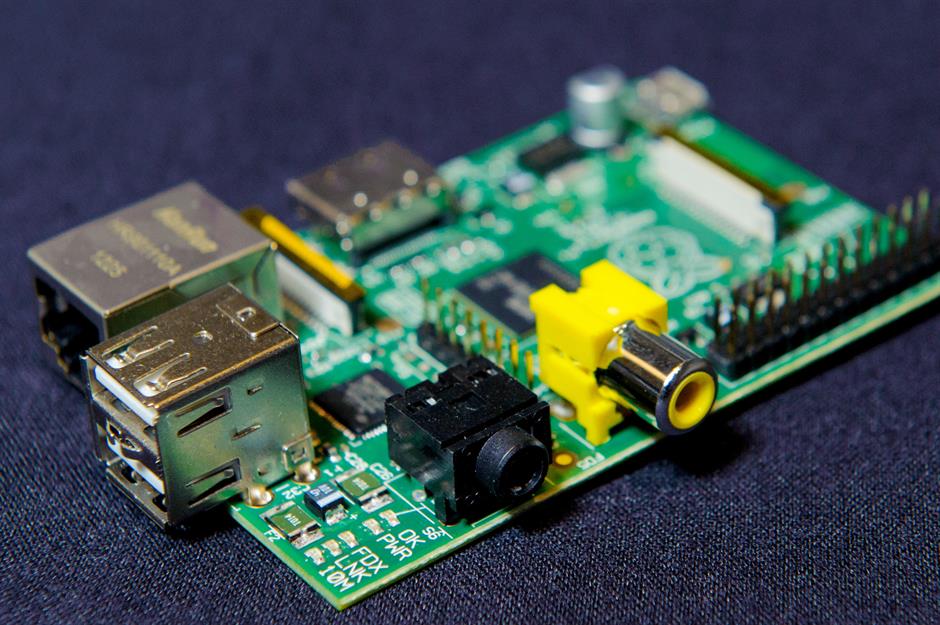
In the digital age, it's essential that children learn to use computers. The Raspberry Pi is a low-cost and easily adaptable computer that helps children, including those in developing countries, learn to code.
It was invented by a group of British teachers, academics and computer enthusiasts in 2006, before eventually being released in 2012. The Cambridge-based computer firm is now valued at over £500 million.
Ride-on hand luggage
Revolutionising the world of family holidays, British inventor Rob Law invented the Trunki, a characterful hand luggage case with wheels that kids can sit on, in 2006.
After turning down a £100,000 investment offer on the TV show Dragons' Den, Law built up the company himself and has since sold millions of Trunkis worldwide.
Tangle Teezer
When the Tangle Teezer was launched in 2007, it was touted as a miracle device for dealing with unruly locks and backed by celebrities including Emma Watson and Victoria Beckham. Yet the road to success was a bumpy one.
When the product was pitched by hairdresser Shaun Pulfrey on BBC’s Dragons' Den in 2002, it was ridiculed as a “hair-brained” idea by the panel. Fortunately, others didn’t agree, and the website received so many orders when it first launched that it crashed.
Graphene
A whopping 10 times stronger than steel, Graphene is the strongest material ever tested. It was isolated and characterised by Andre Geim (pictured) and Konstantin Novoselov at the University of Manchester, later winning the pair a Nobel Prize.
Graphene is made of carbon and has tremendous potential for electronics as it also conducts heat and electricity.
Iris recognition
Once the preserve of spy and sci-fi films, iris scanning has become increasingly popular, appearing in everything from smartphones to passport controls.
The software behind it was developed at the University of Cambridge by John Daugman.
Hands-free door handle
After his wife visited a hospital during the COVID-19 pandemic, Welsh inventor Wyn Griffiths came up with the idea of a touch-free door handle which could be opened using an arm to minimise the risk of infection from touching door handles.
By that same evening, he’d already come up with a prototype. The 3D designs for the “arm”, which can be attached to an existing door, have been distributed online and can be downloaded and printed by anyone with a 3D printer.
Liked this? Click the Like button above. And click the Follow button above for more great stories from loveMONEY
Now discover 10 inventors who made a fortune from just one product