loveFOOD EN-UK
Britain's most delicious traditional cakes, ranked
25 traditional British cakes everyone should try
By Rachael Perrett · July 23, 2026
Great British bakes
Whichever way you slice it, cake plays a big part in the UK's culinary culture. Whether round or square, iced or drizzled, Britain's bakes are so mouthwateringly delicious that they've earned fans around the world. Need some more sweetness in your life? We've ranked the best traditional British cakes everyone should try, from lesser-known regional treats to familiar favourites. Put the kettle on and get reading...
Read on to discover the tastiest cakes the UK has to offer – counting down to the most beloved British bake of all.
We’ve based our ranking on the popularity and cultural significance of each cake, and on the opinions of our well-travelled (and well-fed) team. The list is unavoidably subjective.
25. Tottenham cake
This nostalgic cake was first made in the 19th century by Quaker Henry Chalkley as a cheap treat for children; back then, they sold for just a penny per square. Later, in 1901, they were handed out for free to celebrate Tottenham Hotspur Football Club's first-ever FA Cup win. Still enjoyed throughout the North London town today, the classic vanilla traybake is topped with pink glaze icing and shredded coconut. Traditionally, mulberries gave the icing its vibrant hue, but today’s recipes tend to use raspberries and food colouring to the same effect.
24. Westmorland pepper cake
Westmorland is a historic county in North West England that's now part of Cumbria, though its name and influence live on in this spiced fruit cake. It’s said that the inclusion of spices in the cake's ingredients list is the direct result of international trade with overseas British colonies; locally produced wool was offered in return. The batter includes dried fruit, but the lip-smacking combination of ground ginger, clove and black pepper is what makes this cake really special.
23. Gâche mélée
Britain isn’t short of regional apple cakes, including Guernsey's indulgent gâche mélée (not to be confused with gâche, which is more akin to a tea bread). This cake is typically made in the autumn during the apple harvest, and many variations on the recipe exist. However, one thing always stays the same: suet takes centre stage. Some varieties also include warming spices like cinnamon or nutmeg.
22. Cornish hevva cake
Cornish hevva cake, also known as heavy cake, gets its name from the Cornish word huer, meaning 'to look out for'. Traditionally, it was made by fishermen’s wives while their husbands were at out at sea on fishing trips. The egg-free dough, which is a little like a shortbread dough, features mixed spice and dried fruit, and it's often scored in a criss-cross pattern resembling a fishing net. Despite its name, it’s surprisingly light and crumbly.
21. Angel cake
Not to be confused with angel food cake (a light-as-a-feather sponge popular in the USA), angel cake is a classic British layer cake. Typically baked in a loaf tin, it features three simple vanilla sponges – yellow, pink, and plain – sandwiched together with fluffy vanilla buttercream. The vibrant cake can then simply be dusted with icing sugar, or topped with fondant icing, piped and feathered.
20. Black bun
Neither black nor a bun, black bun is a Scottish fruit cake with one crucial difference: it comes encased in pastry. Said to have been introduced by Mary, Queen of Scots, it was traditionally eaten on Twelfth Night, the final night of the Christmas season. These days, it’s eaten on Hogmanay – Scottish New Year's Eve. The moist, rich cake includes dried fruits (think raisins, sultanas and currants), flaked almonds and spices like ginger and cinnamon.
19. Tunis cake
Tunis cake was once a common part of British Christmas celebrations, believed by some to originate in the Edwardian period (1901-10). To make it, a lemon-flavoured Madeira sponge is topped with a generous layer of chocolate ganache and marzipan fruits. It was popular in the 1970s thanks to biscuit brand McVities, which launched a commercial version. Much to fans’ dismay, the cake was discontinued in the 1980s – but it’s now making a comeback, with supermarkets and bakeries selling their own versions.
18. Cornish saffron cake
Fresh saffron lends a distinct yellow hue and delicate sweetness to this Cornish speciality. Legend has it that the valuable spice came to the area when visiting merchants traded it for Cornish tin. This was likely the Spanish in the 14th century, though some say it was the Phoenicians a little earlier on. Then, as now, the saffron was infused into various bread and cake recipes. To make this yeasted cake, it's combined with dried fruit and candied peel. As with many Cornish treats, it's served with clotted cream.
17. Marmalade cake
Chunky marmalade lends this bittersweet cake an almost toffee-like texture and flavour. Grated orange and lemon zest add even more punch, balancing out the sweetness of the moist sponge. There are no hard-and-fast rules when it comes to preparing and serving this one. It’s often baked in a loaf tin and topped with a simple glaze icing – but it can also be made as a tray bake or classic round cake and simply spread with more marmalade.
Liking this? Click the Like button above. And click the Follow button above for more great stories from loveFOOD
16. Dorset apple cake
The county of Dorset is known for its abundance of apples, so it’s not surprising that residents voted for this rustic cake to be crowned their 'national dish' in 2006. That said, there’s no single recipe for Dorset apple cake. While the basic batter balances tart local apples with brown sugar in equally generous measures, many variations exist. Some apple cakes are made with wholemeal flour instead of plain, and some include sultanas and warming spices – usually cinnamon and nutmeg or mixed spice.
15. Butterfly cakes
These soft, delicate cupcakes were a staple at children's birthday parties in the 1970s and 80s. Like miniature Victoria sponges, the small cakes are simple, light, and fluffy. Once baked, they’re topped with a small swirl of buttercream icing and two sponge ‘wings’ to create a butterfly effect. An optional dusting of icing sugar and dollop of jam makes them even more magical.
14. Fondant fancies
In 1967, British brand Mr Kipling, known for its pies and cakes, launched French Fancies. The miniature sponges were topped with a ball of buttercream and encased in a thin layer of fondant icing. Traditionally, they came in brown, pink and yellow varieties, each drizzled with melted chocolate. These days, homemade versions are known as fondant fancies and can come in various colours and flavours, often incorporating layers of marzipan and apricot jam.
13. Parkin
Parkin is a robustly spiced ginger cake that's popular in Scotland and Northern England. It’s thought to have originally been a Pagan cake that was eaten to celebrate the first day of winter, but the recipe has evolved since then. These days, parkin is a warming treat that's enjoyed on Bonfire Night (5 November) and throughout autumn. Parkin has plenty of kick from fresh and ground ginger, a sticky, sweet texture from a mixture of brown sugar, treacle and golden syrup, and a coarseness, courtesy of oatmeal.
12. Dundee cake
Crumblier than your average fruit cake, this Scottish bake is distinguished by its decorative topping of blanched almonds. The batter itself is packed with dried fruit, glacé cherries and mixed spice, as well as marmalade and orange zest. The story goes that it was first made for Mary, Queen of Scots in the 16th century. However, it was made more popular by Scottish marmalade company Keiller’s in the late 18th century; the brand was the first to produce it commercially, and gave it its name.
11. School cake
Just as its name suggests, school cake is a bake that's traditionally served as part of a school dinner. While old-fashioned, it's a mainstay of British bake sales – and it's still handed out as an occasional school treat. The fuss-free cake is essentially a simple vanilla sponge, cut into equal-sized squares and topped with glaze icing. But it wouldn’t be school cake without a generous scattering of hundreds and thousands (sugar sprinkles).
10. Pound cake
Countries around the world have their own versions of pound cakes, but it's possible that the recipe originated in Britain; it first appeared in The Art of Cookery by Hannah Glasse in 1747. Traditionally, pound cake was made with a pound each of flour, butter, eggs and sugar. These days, recipes vary – some swap the butter for vegetable oil, or inject a bit of flavour (think lemon juice or chocolate). No matter what the specific ingredients, this cake is often served with a dusting of icing sugar or a simple glaze.
9. Madeira cake
Although the names are often used interchangeably, Madeira cake isn't the same as pound cake – and it's not from Madeira, either. Its name comes from the fact it was traditionally served with a glass of Madeira wine, though today it's more commonly enjoyed with a cup of tea. The soft, delicately flavoured sponge features lemon zest and ground almonds, making it deliciously zingy and fresh.
8. Fairy cakes
Fairy cakes are, arguably, the simplest British cakes around – and they're also among the most nostalgic. The ideal recipe to make with (or without) the help of the kids, these little treats are commonly sold at bake sales or served at parties. Similar to butterfly cakes, they’re essentially classic vanilla sponges, typically topped with plain or coloured icing and scattered with hundreds and thousands (tiny sugar beads or sprinkles).
7. Jamaican ginger cake
Despite its name, Jamaican ginger cake is a British treat. Its name comes from the Jamaican ginger, sugar and molasses that give the cake its rich depth and colour. Typically baked in a loaf tin, the moist cake boasts plenty of warmth thanks to the addition of cinnamon, cloves and allspice – while brown sugar, treacle and golden syrup balance out the spice with sweetness.
6. Simnel cake
Dating back to medieval times, simnel cake was traditionally prepared on Mothering Sunday, also known as Simnel Sunday. It's said that domestic servants and live-in apprentices would travel to their mother church or to visit their mothers, eating high-calorie simnel cake for nutrition. These days, the spiced fruit cake is associated with Easter and Lent. It features a marzipan topping plus 11 or 12 marzipan balls, which represent Jesus and the Apostles.
5. Battenberg
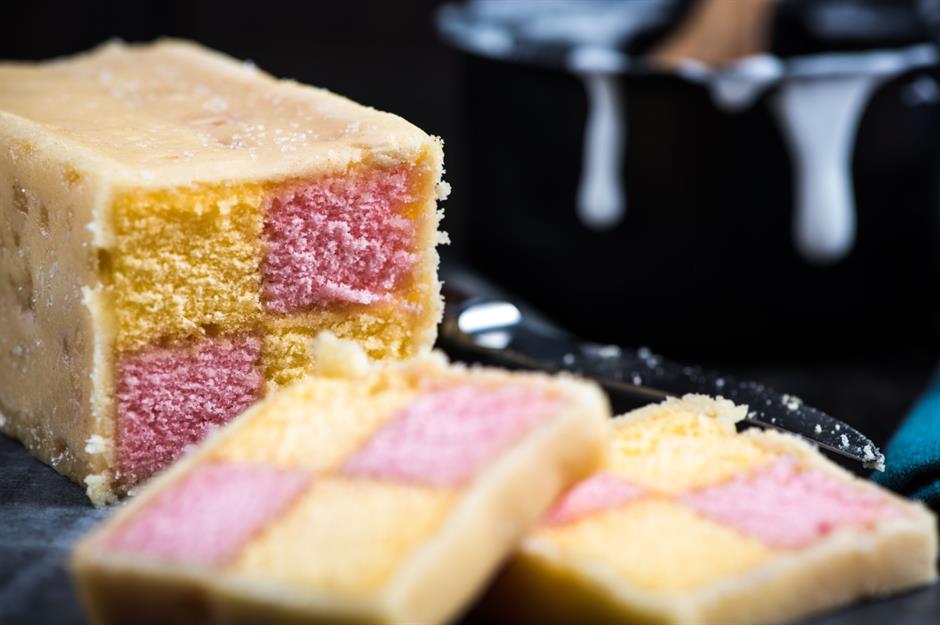
The story goes that this cake was created in 1884 to celebrate the marriage of Queen Victoria’s granddaughter, Princess Victoria, and Prince Louis of Battenberg. The original recipe called for nine squares; however, when the cake started being mass-produced at the beginning of World War II, it began to feature the four-panel checkerboard pattern we know and love today. Despite appearances, the recipe is simple; the grid of white and pink vanilla sponge is held together with apricot jam and a layer of marzipan.
4. Coffee and walnut cake
Unlike American coffee cake (a German and Dutch–influenced sweet bread with a crumble topping), this British bake sees layers of coffee-infused sponge sandwiched with coffee-flavoured buttercream and topped with chopped walnuts. The cake's origins are a little murky, but it’s believed to have been created by the flour brand McDougall’s; the company introduced a 'new' recipe for what’s now a popular teatime treat in a magazine advert in 1934.
3. Christmas cake
It may be a cake now, but this Christmas confection's roots lie in the plum puddings of the Middle Ages. Over the years, different ingredients were added and removed; plum pudding became Christmas pudding, and a variant of Christmas pudding eventually became the Christmas cake we know and love today. These days it’s made weeks in advance and fed with brandy, sherry or whisky in the run-up to Christmas Day. The spiced fruit cake is then topped with a layer of almond and sugar paste (or marzipan) and royal icing.
2. Lemon drizzle cake
Lemons may not be synonymous with Britain, but lemon drizzle cake certainly is. Its history is murky, but it’s likely to have evolved from pound cake as trade with Mediterranean merchants brought citrus fruits to British shores. However, the first official recipe was published in 1967 in London newspaper The Jewish Chronicle. To make it, cake batter is infused with lemon juice and zest – and, once cooked, the bake is drizzled with lemon sugar syrup, then left to soak up the flavour.
1. Victoria sponge
With a royal seal of approval, the Victoria sponge is a quintessentially British cake. In the mid-19th century, Duchess of Bedford (and Queen Victoria’s Lady of the Bedchamber) Anne Russell introduced the Queen to the tradition of afternoon tea and cake. Around the same time, baking powder was invented – a development that led to the creation of the wonderfully light Victoria sponge. The recipe remains much the same today as it was back then; it's served with a layer of jam and dusted with icing sugar, often with the addition of cream.
Now read our ranking of the world's best cakes
Liked this? Click the Like button above. And click the Follow button above for more great stories from loveFOOD