loveFOOD EN-UK
31 tasty ways to elevate mac 'n' cheese
How to make the best mac 'n' cheese
By loveFOOD Staff · December 30, 2024
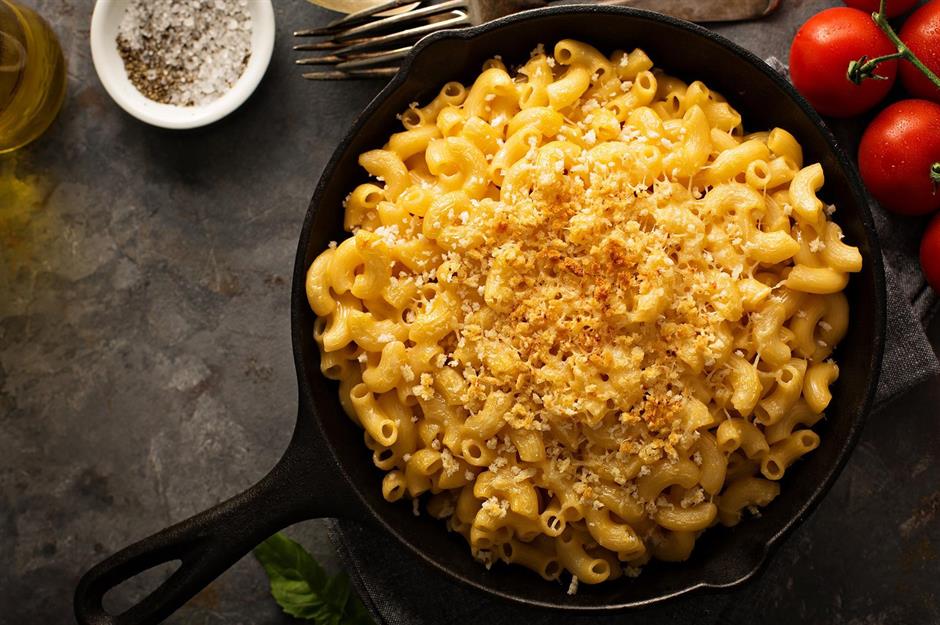
Cheesy does it
Creamy and carby, mac 'n' cheese is the perfect comfort food. It’s inexpensive, simple to make, can be eaten as a main or as a side dish, and mixed in – or topped – with all sorts of lovely extras. Here we cover the history of the dish, how to make it, tips for easy and deluxe versions, and recipes to make your mouth water.
A bit about mac 'n' cheese
Also known as macaroni cheese, macaroni pie and cheesy pasta, it may surprise you to know mac 'n' cheese has been a favourite comfort food for around 800 years. While it's Italian in origin, versions featured in the English cookbook, Forme of Curry, date as far back as the 14th century. Recipes continued to appear in 18th- and 19th-century cookbooks. The Victorian writer Mrs Beeton advocated "tender but perfectly firm" pasta and it’s still cooked al dente today. In the US, third president Thomas Jefferson is credited with introducing the dish to the States.
Shop-bought vs homemade
Countless Americans will recall growing up on a diet that included packaged mac 'n' cheese, notably brands such as Kraft and Batchelors. While quick and convenient (there are lots of hacks online about how to pimp up a packet), it's still processed food. Though now largely free from artificial colours and preservatives, it's healthier to make a batch and freeze so you have homemade ready meals to hand. Read on to find out how.Go big when it comes to pasta
Macaroni comes in different shapes and sizes. Long, short, curly and ridged tubes are suitable for the dish but it's the curved elbow macaroni that's used most often. Other types of pasta such as campanelle, conchiglie and penne are also good because these shapes collect sauce, though purists argue that without macaroni it's just a cheesy bake. Avoid miniature shapes as these can become mushy.How to cook the pasta
Macaroni should be cooked in a large pan of boiling salted water for around eight minutes (though packet instructions vary). It's smaller than some pasta shapes, so you won’t need long if you're aiming for al dente, which is firm cooked pasta.Why al dente?
There are a couple of reasons you want the pasta cooked al dente. Firstly, when it's added to hot cheese sauce it will continue to cook so it's better to slightly undercook it. Secondly, mac 'n' cheese is already a soft creamy dish so al dente pasta will add texture.Here’s a handy pasta hack
One way to incorporate extra flavour into pasta is to cook it in chicken or vegetable stock, or half water and half stock.Choosing the right cheese
Cheddar is standard but using only one type of cheese can result in a one-dimensional dish. Instead, go for a blend of easy-to-melt cheeses by combining Gouda, Gruyère or Emmental with mature Cheddar. Whisk in finely grated Parmesan for a savoury pungency or Comté for a rustic flavour.The sauce
Traditionally, a mac 'n' cheese base is made from béchamel sauce. Make a roux by combining melted butter with plain flour then slowly whisk in milk, stirring continually until it thickens. Add grated cheese and stir until melted – when the cheese is added it effectively becomes a Mornay sauce. Make sure it's thick enough – you need a sauce that will coat pasta, not a soup.Rescue the sauce: too thin
If your sauce is too thin and runny, the easiest way to fix it is simply to add more cheese. You can also return it to the heat and simmer for longer until it thickens more, however, this can cause the sauce to separate.
Liking this? Click on the Follow button above for more great stories from loveFOOD
Rescue the sauce: too thick
It's easy to get carried away with how much cheese you're adding, resulting in a sauce that's way too thick. A splash of milk will loosen the sauce – continue adding milk and stirring until you've reached the desired consistency.Rescue the sauce: too grainy
Sometimes cheese and milk don't mix too well, and all your efforts result in a lumpy, gloopy mess. Don't be quick to start from scratch though – you can easily rescue the sauce by giving it a quick blitz with an immersion hand blender or blending it in batches with a regular blender.Upgrade the sauce
Although the cheese sauce is a classic everyone loves, why not try something a little different? Whisk basil, kale or pesto to brighten up a classic cheese sauce, add roasted and puréed butternut squash or pumpkin for a smooth, rich sauce or blitz sun-dried tomatoes and red chilli flakes for a light kick.The cheat's sauce
For a quicker, fool-proof sauce that requires a lot less washing up after, skip the roux and use evaporated milk instead. To make the sauce, grate the cheese and mix with evaporated milk, eggs and seasoning. Pour over the pasta and bake until ready.Herbs and spices
The sauce can be very rich so lift it with a sprinkling of nutmeg or paprika, infuse the sauce with a bay leaf or two, or add a dollop of mustard and dried oregano.The final stage
Once the macaroni is cooked and the sauce is ready, drain the pasta and stir in the sauce, then transfer to an ovenproof dish, sprinkling breadcrumbs or more grated cheese on top. You can then place under a hot grill to brown or in the oven to cook further and crisp up. Remember that your pasta will continue to cook in the oven – another reason to ensure it's not overdone.The breadcrumbs
Often overlooked, breadcrumbs are just as important as the pasta, the cheese and the sauce to make the perfect mac 'n' cheese. The trick to achieving the perfect crispy topping is to toast the breadcrumbs before they go in the oven. Melt butter in a skillet over a medium heat, add panko breadcrumbs and toast until they turn a light golden brown.Stovetop version
For a one-pot version that saves on washing up, stir in a mix of soft cheeses, such as mascarpone, along with grated cheese and almost-cooked pasta to create a sauce of sorts. Sprinkle in more hard cheese, if desired, or bits of mozzarella, which will melt and create a perfect stringy-cheese finish.Three-ingredient mac ‘n’ cheese
Making mac 'n' cheese with just three ingredients requires even less work than the stovetop version. Firstly, cook the pasta in milk on a simmer rather than a boil so the milk isn’t scorched. This takes longer, around 15-20 minutes. Towards the end, stir in grated cheese and season for a worthy three-ingredient alternative to the classic.Toppings
Spiced beef mince, pulled pork or chopped hot dogs are all classic, hearty toppings. For something fresher, try incorporating grilled tomatoes or additions such as chopped spring onions, herbs or chilli.
Get the recipe for mac 'n' cheese with grilled tomatoes here
Deluxe versions
For an even more indulgent dish, incorporate ham, lardons, bacon or pancetta into the mix. If you’re feeling really decadent, grate truffle over the top or add luxurious seafood, like lobster tails, crayfish or crab.
Lighter versions
Alternatively, to lighten up a heavy dish, use skimmed milk when making the béchamel and limit the cheese. Cooked broccoli, spinach or red pepper will also pad out the dish, so you eat less pasta and more veg.Two classics combined
Another option is to combine cauliflower cheese with mac 'n' cheese to make cauliflower mac 'n' cheese. You could also incorporate peas, potatoes, carrot or broccoli.
A vegan version
There’s no need to give up this dish if you’re vegan or lactose intolerant. This vegan recipe uses nutritional yeast to create a cheesy tang. While pickled cabbage seems an unusual ingredient to add, it adds a subtle lactic quality to this version.
A very British version
Made with the famous British yeast extract spread Marmite, this slightly unusual mac 'n' cheese recipe is extra savoury and indulgent. Best of all, you can make it in a mug, and it will be ready in minutes.
A Korean twist
Upgrade standard mac 'n' cheese with a béchamel base, four different types of cheese, and spice and crunch from kimchi. Korean kimchi – fermented vegetables, usually cabbage and radish – and cheese is a combination that is winning fans all around the world. Try it and at first bite you’ll taste why.
Cheat's slow cooker version
Really short on time? Your slow cooker can come into its own, freeing up time for you to get on with other jobs. Take a standard mac 'n' cheese recipe and bung all the ingredients into your slow cooker. Season then cook on low for 1.5 to 2.5 hours, or until the pasta is ready. Stir occasionally, adding more milk if needed.
Leftovers: reheating mac 'n' cheese
When reheated, mac 'n' cheese dries out quickly and has none of the creaminess of a freshly made dish. The biggest secret to reviving a day-old mac 'n' cheese is adding a bit of milk to it before reheating. Add one tablespoon of milk per every cup of pasta, cover the bowl and heat for three to four minutes, making sure to stir through every minute.Leftovers: mac 'n' cheese arancini
It's rare to have any leftovers with this dish but on the off-chance, you can use cold mac 'n' cheese to make a type of arancini, a traditional fried snack from Italy. Shape leftover mac 'n' cheese into balls, dip in flour, egg and breadcrumbs, then deep-fry. You may need to chop the pasta into slightly smaller bits first.Leftovers: mac 'n' cheese toasties
Double carb and put the mac 'n' cheese between two slices of bread. Either pan-fry or use a sandwich maker for a treat within a treat.Leftovers: mac 'n' cheese mini pies
Dollop cold leftover mac 'n' cheese into individual, oiled muffin tin compartments and bake at 180°C/350°F for around 20 minutes. The little pasta pies can be eaten with a salad or in a packed lunch.
Leftovers: mac 'n' cheese soup
You could also rescue leftovers by turning them into a warming, creamy soup. Make a roux, then add chicken or vegetable broth. Bring to the boil, then stir in a few tablespoons of cream cheese, plus whatever cheese you've used in your original mac 'n' cheese. Stir until melted, then combine with the leftover pasta dish.
Liked this? Click on the Follow button above for more great stories from loveFOOD
Now check out super-comforting soups for chilly days