Gallery
25 big-budget films that flopped at the box office
The movie flops that cost Hollywood studios a fortune
By Danielle McAdam · December 31, 2022
The films that flopped, despite big budgets
Hollywood studios invest hundreds of millions of dollars into a movie in a bid to create the next big blockbuster, but not every film can be the new Avatar or Titanic. From passion projects with insanely high budgets to cinematic flops that were supposed to spawn a franchise, read on to discover some of the biggest box office bombs in cinematic history using data from Statista, except where otherwise stated, with losses adjusted for inflation into 2022 money. All dollar amounts in US dollars.
Poseidon: lost $93.8 million (£68.5m)
Poseidon, a survivor thriller movie released in 2006, was directed by Wolfgang Petersen. Due to his previous success, with films such as Troy and The Perfect Storm under his belt, Warner Bros. confidently handed him a $160 million (£116.8m) production budget for the project. However, the movie failed to make a splash. A poor script led to a wave of negative reviews, while a lack of big-name leads meant there was limited star power.
Technically, the film managed to outperform its production budget, with a worldwide gross of $181.6 million (£132.6m), but Warner Bros. had expected more. By comparison, The Da Vinci Code, which opened around the same time, grossed a jaw-dropping $760 million (£554.9m) on a similar budget. Overall, with the cost of a lavish marketing campaign factored in, it's estimated to have lost the studio a staggering $69 million (£50.4m), or $93.8 million (£68.5m) in today's money.
Pan: lost $99.8 million (£72.9m)
Released in 2015, Pan was Warner Bros.'s adaptation of J.M. Barrie's classic novel Peter Pan. Confident of cinematic success, the studio gave the movie a production budget of $150 million (£109.5m). Despite acclaimed director Joe Wright leading the project, however, Pan only managed to gross $128.4 million (£93.8m) worldwide.
Several factors contributed to Pan's failure. To begin with, while Hugh Jackman played the role of Captain Hook, the movie's lack of major star names failed to appeal to the masses. Furthermore, critics slammed the film, with everything from the plot to the special effects criticised. It was also embroiled in a whitewashing scandal due to the Native American princess, Tiger Lily, being portrayed by Rooney Mara, a White actress. Factoring in marketing and distribution costs, the movie altogether lost a far-from-magical $86.3 million (£63m). That's $99.8 million (£72.9m) in today's money.
Tomorrowland: lost $104.3 million (£76.1m)
On paper, Tomorrowland was a sure-fire hit. Financially backed by Walt Disney Studios Motion Pictures, it starred one of Hollywood's most bankable leading men, George Clooney, and also had a title inspired by a land at the globally adored Disney theme parks. For these reasons, the project was given a mammoth production budget of $190 million (£138.7m).
Yet despite all these factors in its favour, the film – which opened to mostly positive reviews – grossed $209 million (£152.6m) globally, a mere $19 million (£13.9m) more than its production costs. Factoring in promotional costs, Disney lost around $90.2 million (£65.9m), or $104.3 million (£76.1m) in today's money, with a cryptic marketing campaign failing to generate interest.
The Promise: lost $106.8 million (£77.9m)
The Promise, a romantic drama set against the backdrop of the 1915 Armenian Genocide, premiered in 2016 at the Toronto International Film Festival. It was subsequently picked up for distribution by Open Road Films, with high hopes that the combined star power of Christian Bale and Oscar Isaac would carry the film to cinematic success.
But it wasn't to be. The Promise pulled in a pitiful $12.4 million (£9m) worldwide, $77.6 million (£56.7m) less than its $90 million (£65.7m) production budget. Overall, the picture is believed to have lost $93.6 million (£68.3m), or $106.8 million (£77.9m) in today's money.
Hugo: lost $109.3 million (£79.8m)
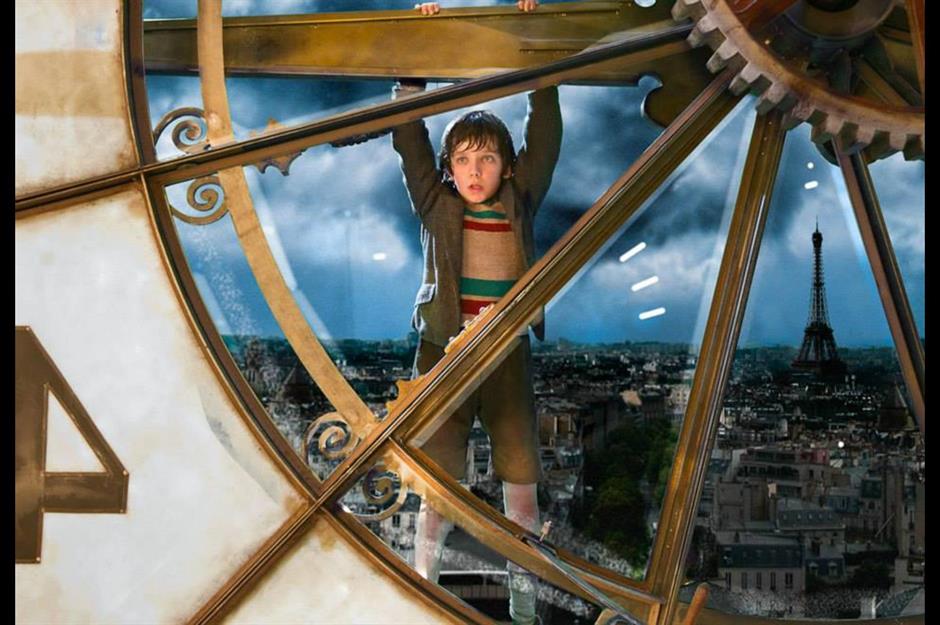
Martin Scorsese's Hugo dominated the 2012 Academy Awards, garnering 11 nominations and winning five gongs. Given this, it's even more surprising that the film was such a resounding flop at the box office. Paramount Pictures gave the movie a production budget of $156 million (£113.9m), yet it only grossed $185.8 million (£135.6m) worldwide. Factoring in its significant marketing and distribution costs, it’s estimated to have lost around $91.5 million (£66.8m), or $109.3 million (£79.8m) when adjusted for inflation.
Hugo was yet another movie that suffered at the hand of poor marketing, with confusion surrounding its target audience. The fact it found itself pitted against some tough competition also contributed to its failure: The Muppets and The Twilight Saga: Breaking Dawn – Part 1 were both released on the same weekend.
R.I.P.D.: lost $109.3 million (£79.8m)
Ryan Reynolds is one of Hollywood's best-loved and most bankable stars, yet even he has experienced the pain of a box office failure, most notably in the form of 2013's disastrous R.I.P.D.. The film, which also starred Jeff Bridges and Kevin Bacon, reportedly had a production budget north of $130 million (£94.9m). Despite this, it only managed to gross $78.3 million (£57.1m) worldwide, $51.7 million (£37.7m) less than its production costs.
Universal Pictures, who distributed R.I.P.D., allegedly knew it was doomed long before they began promoting it, with the movie widely panned by critics. Even though it cut the marketing budget, it still lost $92.9 million (£67.8m), or $109.3 million (£79.8m) in today's money.
Jupiter Ascending: lost $110.7 million (£80.8m)
Jupiter Ascending, directed by the Wachowskis, grossed $183.9 million (£134.3m) worldwide, despite a production budget reportedly between $176 million (£128.5m) and $200 million (£146m). As well as boasting acclaimed directors at the helm, the potential for the 2015 space opera shone bright thanks to the star power of Hollywood heavyweights Channing Tatum and Mila Kunis. So why did it fail?
While the film today has a cult fanbase, wider audiences at the time struggled to get on board with its high-concept sci-fi plot. This, alongside lukewarm opening reviews, resulted in moviegoers skipping it in favour of American Sniper and The SpongeBob Movie: Sponge Out Of Water. All in all, it’s estimated the film made a colossal loss of $95.7 million (£69.9m), or $110.7 million (£80.8m) when adjusted for inflation.
Speed Racer: lost $111.8 million (£81.6m)
In 2008 Warner Bros. released Speed Racer, an action-comedy movie based on the anime series of the same name. The film starred Emile Hirsch and Christina Ricci, with both actors already popular thanks to movies such as Into the Wild and The Addams Family. Despite this, the flick grossed just $93.3 million (£68.1m) worldwide, significantly less than its production budget of $120 million (£87.6m).
The downfall of Speed Racer was its confusing marketing campaign. The film was for children, yet the promotional activity focused on the fact that it was directed by the Wachowskis, who were famed for helming the Matrix franchise. As a result, many parents assumed the film was for adults and avoided taking their children to see it. All told, this blunder is estimated to have cost the studio $87.8 million (£64m), or $111.8 million (£81.6m) when adjusted for inflation.
47 Ronin: lost $113.2 million (£82.6m)
Keanu Reeves has fronted several cinematic smashes, including John Wick and the billion-dollar Matrix franchise. He's a big-name, bankable star, and a safe bet for studios, yet even he isn't immune to the occasional cinematic flop. Take 2013's 47 Ronin, the Hollywood retelling of the Japanese legend, which earned only $151.8 million (£110.8m) worldwide, despite a budget upwards of $170 million (£124.1m).
Universal's production appears to have been doomed from the outset. Carl Rinsch, a first-time director, reportedly struggled with the sheer size of the project, and the fact that Keanu Reeves was cast to represent a character of Asian heritage left some moviegoers frustrated. Add unfavourable opening reviews to the mix, and it's not surprising that its prospects were grim. Overall, the film reportedly lost $96.2 million (£70.2m), or $113.2 million (£82.6m) in today's money.
Evan Almighty: lost $114.7 million (£83.7m)
Following the success of Jim Carrey's 2003 comedy flick Bruce Almighty, Universal began work on a sequel. Evan Almighty's production budget was initially set at $140 million (£102.2m) but was later increased to $175 million (£127.8m), making it one of the most expensive comedy movies in cinema history.
Despite that, Evan Almighty was a resounding flop at the box office, grossing just $174 million (£127m) globally, less than its production costs. As Jim Carrey had declined to reprise his role for the film, Steve Carell was cast as the new lead. This was considered a major cause of the movie's failure: at the time, Carell, who is now a household name thanks to The Office, did not have the star power to front such a big-budget production. Including marketing costs, 2007's Evan Almighty is estimated to have lost $86.7 million (£63.3m), or $114.7 million (£83.7m) in today's money.
Jack The Giant Slayer: lost $121 million (£88.3m)
Following the success of Universal's Snow White and the Huntsman in 2012, Warner Bros. hoped for some more fairytale magic with its dark retelling of another classic yarn, in this case Jack and the Beanstalk. Starring Nicholas Hoult, 2013’s Jack The Giant Slayer had a mammoth $200 million (£146m) production budget behind it, yet only managed to gross $197 million (£143.8m) worldwide.
The movie's downfall could be due to a last-minute name change by the studio. Too gory and frightening for younger children, the film was primarily aimed at adults and teenagers. Whilst the initial title was Jack The Giant Killer, the decision was made to swap 'killer' for the more family-friendly 'slayer', effectively alienating the older audience that Warner Bros. had hoped to attract. This error reportedly resulted in losses of a whopping $102.8 million (£75m), when factoring in its high marketing costs. That's a staggering $121 million (£88.3m) when adjusted for inflation.
Monster Trucks: lost $124.8 million (£91.1m)
Monster Trucks was released by Paramount on Boxing Day 2016. With a $125 million (£91.3m) production budget and a huge marketing investment, it was hoped that the film would attract families with young children. However, it was a monstrous disaster, grossing only $64.5 million (£47m) worldwide.
Many critics claimed a crucial element in the film's failure was the lack of star power to draw in crowds. The two top-billed actors were Lucas Tiller and Rob Lowe, who seemingly didn't have the recognition required to front such a big-budget project. It's believed that the movie's total losses amounted to a staggering $109.2 million (£79.7m), or $124.8 million (£91.1m) when adjusted for inflation.
King Arthur: Legend of the Sword: lost $126.3 million (£92.2m)
Warner Bros. was so confident that 2017's King Arthur: Legend of the Sword would be a smash that it gave the film a hefty $175 million (£127.8m) production budget, with five sequels planned. However, the box office bomb was the studio's biggest disaster to date, grossing only $148.7 million (£108.6m) globally, meaning an overall reported loss of $112.8 million (£82.4m). That's a whopping $126.3 million (£92.2m) when adjusted for inflation.
The casting of Charlie Hunnam, best known for his role in Sons of Anarchy, as Arthur was blamed for the film's failure. Audiences also didn't like that the plot was a prequel to the classic Arthurian legend, stating that they didn't want to wait for a sequel to get to the actual meat of the story. Furthermore, the lack of women in the cast was a further point of criticism. Needless to say, Warner Bros. swiftly cancelled those sequel plans.
Town & Country: lost $126.7 million (£92.5m)
Town & Country reportedly started out with a much more modest budget, but with the addition of star power, including the likes of Diane Keaton, Warren Beatty, and Goldie Hawn, costs soon began to soar. Production delays and numerous script rewrites saw the budget rise further and, all in all, it's estimated that the production budget was around $90 million (£65.7m), according to Box Office Mojo. An unfathomable sum when you consider that Town & Country was a rom-com flick with no expensive CGI or set design.
Despite its skyrocketing budget and all-star cast, audiences and critics alike failed to be impressed with Town & Country. The film pulled in a pitiful $10.4 million (£7.6m) at the global box office, losing a resounding $79.6 million (£58.2m). That's $126.7 million (£92.5m) when adjusted for inflation, considering the film was released in 2001.
Deepwater Horizon: lost $128.5 million (£93.8m)
Lionsgate's 2016 Deepwater Horizon told the real-life story of the Deepwater Horizon disaster: the drilling rig explosion and resulting oil spill that occured in the Gulf of Mexico in 2010. Despite positive reviews, two Oscar nominations, and the casting of Hollywood heavyweight Mark Walhberg in the lead role, the film was a flop. It grossed $121.8 million (£88.9m) worldwide, significantly less than its $156 million (£113.9m) production budget.
The film's biggest issue was that it drew in a primarily older audience: on the opening weekend alone, 67% of ticket buyers were over the age of 35. To justify such a large budget, a production needs to appeal to the masses, which Deepwater Horizon clearly didn't. The film is projected to have lost $112.5 million (£82.1m) in total, a staggering $128.5 million (£93.8m) in today's money.
How Do You Know: lost $131.2 million (£95.8m)
The 2010 romantic comedy How Do You Know featured an all-star cast, including Reese Witherspoon, Owen Wilson, Jack Nicholson, and Paul Rudd. With those names alone, you'd think the movie would be a hit. However, the film made a mere $48.7 million (£35.6m) at the worldwide box office, a pittance compared to its $120 million (£87.6m) production costs.
Strong competition on its opening weekend from the likes of Black Swan, Tron: Legacy, and The Fighter is considered to be one of the main reasons for the film's failure. This, combined with bad reviews, doomed Sony's big-budget production. With additional costs such as marketing factored in, it’s reported that the film lost a painful $104.3 million (£76.1m). That's an eyewatering $131.2 million (£95.8m) in today's money.
John Carter: lost $135.6 million (£99m)
It’s reported that Walt Disney Pictures gave 2012's John Carter a whopping budget of $306.6 million (£223.8m), confident that the sword-and-sandal space saga would be a hit. However, audiences struggled to get on board with the movie's wacky premise, with it managing to make just $284.1 million (£207.4m) worldwide and resulting in a total loss of $113.5 million (£82.9m), or $135.6 million (£99m) when adjusted for inflation.
The film's huge budget might well have doomed John Carter from the outset. Disney had originally intended for the movie to be a trilogy, but the plans were quickly scrapped.
The Adventures of Pluto Mars: lost $146.3 million (£106.9m)
Eddie Murphy was the king of comedy in the 1990s and early 2000s. Even he had his share of box office disasters though. Murphy's worst flop to date is undoubtedly 2002’s wacky space comedy The Adventures of Pluto Mars. Despite numerous script rewrites over the course of a 20-year period and a gigantic budget of $100 million (£73m), the film was a resounding dud.
According to Box Office Mojo, it only made $7.1 million (£5.2m) worldwide, losing a shocking $92.9 million (£67.9m) at the box office. When adjusted for inflation, that comes to $146.3 million (£106.9m). Murphy even slammed the movie himself, saying wryly in an interview: "I know two or three people that liked this movie."
Cutthroat Island: lost $163.2 million (£119.2m)
A pirate adventure movie, 1995's Cutthroat Island was such a resounding flop that the production studio behind the flick, Carolco Pictures, actually had to file for bankruptcy. The film immediately got off to a bad start when Hollywood legend Michael Douglas pulled out of his starring role. Then expensive script rewrites and set building caused the budget to soar to $98 million (£71.6m), according to Box Office Mojo.
Slammed by audiences and critics alike, the ill-fated nautical film pulled in just $10 million (£7.2m) at the global box office, losing a hefty $88 million (£64.3m). That's a jaw-dropping $163.2 million (£119.2m) when inflation-adjusted into 2022 money.
Mars Needs Moms: lost $174.8 million (£127.6m)
Disney's biggest flop to date, 2011's Mars Needs Moms made a pitiful $39.2 million (£28.6m) at the global box office, a staggering $110.8 million (£80.9m) less than its $150 million (£109.5m) production budget.
The motion-capture animation turned off audiences before it even hit cinemas, with some calling the premise of the sci-fi movie "creepy". It's also been suggested that the word "moms" in the title might have deterred boys from going to watch it. In total, the film lost a reported $143.4 million (£104.7m), a whopping $174.8 million (£127.6m) in today's money.
We could have included the following films in the top 20, but they were released during the COVID-19 pandemic, which was a major factor in their failure, so we felt it was unjust to include them.
The Call of the Wild: lost $91.2 million (£66.6m)
First up, we have The Call of the Wild, based on the 1903 Jack London novel of the same name. Starring Hollywood heavyweight Harrison Ford, the film follows the adventures of a dog named Buck. Confident that it would be a big hit, Disney gave the project a budget estimated to be somewhere between $125 million (£91.3m) and $150 million (£109.6m).
Though the CGI was criticised, the movie opened to positive reviews. Given the film's February 2020 release date, it appears the pandemic was the biggest factor behind its lack of success at the box office. The Call of the Wild grossed $111.1 million (£81.1m) worldwide. Factoring in marketing costs, it's estimated that Disney lost $86.1 million (£62.9m), or $91.2 million (£66.6m) when adjusted for inflation.
Onward: lost $143.4 million (£104.8m)
Pixar's animated feature Onward boasted the (voice) star power of two Marvel superstars: Tom Holland from Spider-Man and Chris Pratt from Guardians of the Galaxy. Despite opening to positive reviews, the movie was Pixar's biggest failure to date, grossing just $141.9 million (£103.6m) worldwide, despite production costs of $200 million (£146m).
With a March 2020 release, Onward appears to be yet another victim of the pandemic. After factoring in promotional costs, the production is estimated to have lost $135.3 million (£98.8m), or a huge $143.4 million (£104.8m) when adjusted for inflation. However, the pandemic did mean it gained a whole new audience when it came to Disney's streaming service Disney+, although it's impossible to say what that subscription audience was worth.
Mulan: lost $155 million (£113.2m)
A major flop for Disney, 2020’s Mulan made just $70 million (£51.1m) at the worldwide box office, an astonishing $130 million (£94.9m) less than its $200 million (£146m) production budget. It reportedly lost $146.3 million (£106.9m) in total, or $155 million (£113.2m) when adjusted for inflation. The live-action reboot formula had previously worked well for the likes of Cinderella and Beauty and the Beast, so why was Mulan such a failure?
The film was dogged with controversy, with American audiences missing songs and characters that had been cut to cater to a Chinese audience. Equally, Chinese viewers felt disconnected from the film due to a distinct lack of diversity in the production team. Despite these controversies, Mulan was a streaming success, with insights from 7Data suggesting that around 8.7 million subscribers in the US alone paid to download it via Disney+. With this in mind, it looks like the biggest reason the film failed to claw back its investment at cinemas was its March 2020 release date.
Wonder Woman 1984: lost $154.4 million (£112.4m)
Due to the pandemic, Wonder Woman 1984's release was pushed back several times from its original June 2020 date. When it was finally released on Christmas Day 2020, the movie used an unusual tactic, hitting cinemas and the HBO Max streaming platform at the same time. Technically, DC's superhero saga was a box office flop, grossing just $166.5 million (£121.2m) against a budget of $200 million (£146m). When promotional costs are factored in, Wonder Woman 1984 lost $142.9 million (£104m) at the box office, or $154.4 million (£112.4m) when adjusted for inflation.
It’s important to consider though that, while monetary figures for streaming are unknown, it’s safe to say the movie was a streaming success. HBO Max gained an impressive 17.2 million subscribers in the fourth quarter of 2020, largely credited to Wonder Woman 1984. The movie was watched 14.9 million times on the platform.
Chaos Walking: lost $112.5 million (£81.9m)
Tom Holland’s Spider-Man: No Way Home may have broken pandemic-era box office records, but earlier that same year he suffered a major flop in the form of the sci-fi adventure saga Chaos Walking, released in March 2021. Lionsgate, hoping to replicate the success of The Hunger Games, snapped up the rights to the critically-acclaimed young adult book trilogy of the same name by Patrick Ness.
Despite the combined star power of Holland and Star Wars alum Daisy Ridley, and a production budget estimated to be around $125 million (£90.9m), the project was doomed from the get-go. In fact, at a 2018 early screening, the movie was described as "unreleasable" and had to go through timely and expensive reshoots. This wasn't enough to save it, and Chaos Walking grossed a painful $26.5 million (£19.3m) at the box office. Factoring in additional costs, it’s believed the film lost a staggering $112.5 million (£81.9m). But again the pandemic is a large factor in that failure at the box office.
Now discover which James Bond films made the most money